
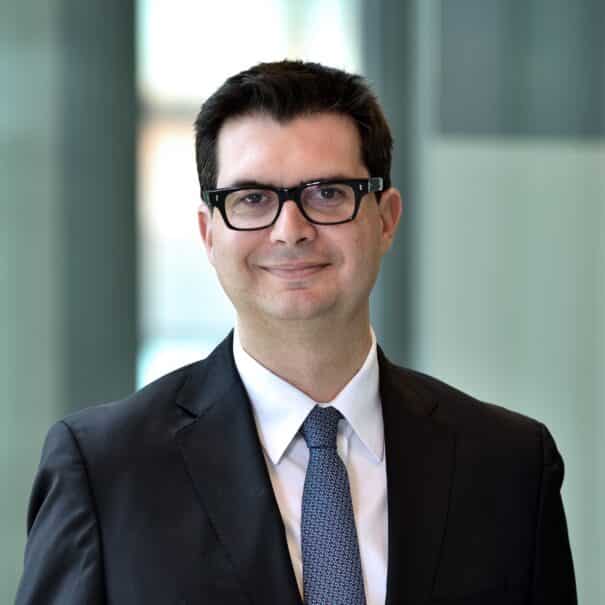
Day in the Life of Otavio Berwanger, Executive Director, The George Institute for Global Health UK
Professor Otavio Berwanger is Executive Director of The George Institute for Global Health UK and Chair in Clinical Trials at Imperial College London. Professor Berwanger heads The George Institute centre in the UK – based in Scale Space in White City Innovation District – where he leads the Institute’s work in close partnership with Imperial College London, pursuing a core focus on health systems science, multimorbidity, women’s health, large-scale clinical trials and planetary health. An esteemed cardiologist and clinical trialist, his own long-standing research interests include exploring innovative clinical trial models and reviewing how to conduct efficient implementation science studies.
The George Institute is an independent global medical research organisation with a mission to improve the lives of millions of people worldwide. With major centres in the UK, Australia, China and India, and with over 400 active projects in more than 60 countries, The George Institute works with partners and communities across the world to conduct rigorous, high-quality research to make a real difference to people’s health – particularly those facing the most barriers.
For our Day in the Life feature, Professor Berwanger gives us a glimpse into his days here in White City, and explains the importance of staying curious, staying humble, and why science is a team sport.
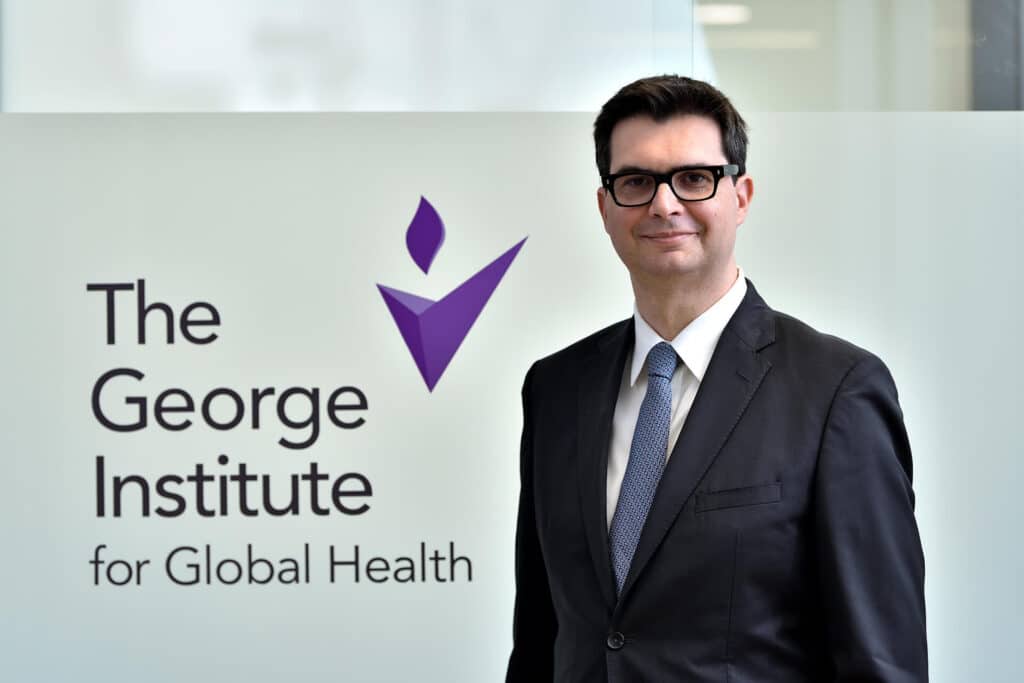
1. What is a typical day like for you?
My days are wonderfully varied. I’ll usually start early with a scan through overnight updates and emails from colleagues across different time zones (The George Institute has offices in the UK, Australia and India and collaborations in over 50 countries!). Much of my time is then spent working with teams at The George Institute and Imperial, shaping strategy, discussing new scientific ideas, and driving forward our research agenda (in my case, large-scale global efficient clinical trials). I try to carve out moments for thinking deeply about new concepts or innovations, often while walking around White City. The days are full, energising, and never dull.
2. What do you love about working in WCID – in three words?
Creative. Collaborative. Inspiring.
3. Why did you choose to be located here?
White City brings together academia, industry, the NHS, and a rich ecosystem of innovators. It’s a place where conversations spark new collaborations, and where ambitious ideas can genuinely take shape. For my work, particularly large, simple, global trials and digital health innovations, being embedded in such an ecosystem is both strategically important and intellectually stimulating.
4. What does ‘innovation’ mean to you and how does your organisation contribute to it?
For me, innovation is about transforming ideas into scalable solutions that meaningfully improve people’s lives. At The George Institute and Imperial, we focus on transforming how large clinical trials are conceived and delivered, making them simpler, faster, more reliable, and truly centred around patients. Whether through digital tools, AI, novel trial designs, or global partnerships, we’re committed to changing the paradigm for how high‑quality evidence is generated and implemented.
5. What are you most proud of in your current role?
I’m proud of the extraordinary teams I work with and the culture of purpose, inclusiveness, equity and collaboration we’ve built. Seeing impactful projects come to life is immensely gratifying. Being able to help others develop their careers and thrive is equally fulfilling.
6. What is the hot topic in your area?
Without doubt, it’s the integration of AI and digital innovation into large simple randomised clinical trials. We’re at a pivotal moment where technology can unlock unprecedented efficiency and precision, but only if we apply it responsibly, rigorously, and with clear patient benefit in mind.
7. What’s the best advice you have for people looking to break into your specialism?
Stay curious, stay humble, and stay close to the clinical questions that truly matter. Master the fundamentals of good science, but don’t be afraid to challenge traditional ways of doing things. And surround yourself with people who inspire you: science is a team sport.
8. What would Plan B have been on the career front?
If I hadn’t become a cardiologist and trialist, I suspect I would have immersed myself fully in music, perhaps as a guitarist chasing the dream of vintage guitar tones and classic rock like some of my heroes Jimmy Page and Eric Clapton. Thankfully, I still get to indulge that passion on the side.